

How To Repair Scratches On Aluminum Cylinder Head
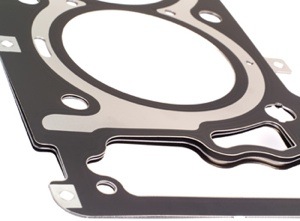 Cylinder caput gasket failures are one of the almost common mechanical issues facing today's mod import technician. One reason head gasket failures are common is because the cylinder head gasket itself tin can become a wearing part. Since the aluminum cylinder caput expands at a slightly college charge per unit than the bandage-iron cylinder cake, the cylinder head actually slides a few thousandths of an inch beyond the gasket surface as the engine warms upwards to operating temperature.
Click Here to Read More
Later on thousands of thermal expansion events, the burn down rings crimped onto the cylinder caput gaskets begin leaking combustion gases into the cooling organization. All also often, this combustion gas leakage causes the coolant to be forced out when the engine thermostat is airtight. When this happens, combustion gas builds up under the closed thermostat and pushes coolant out of the radiator into the coolant overflow reservoir.
In other instances, coolant will be drawn through the worn cylinder caput gasket burn down ring and be lost into the exhaust system. The net effect in either instance will be that the engine runs depression on coolant, which will cause a major overheating complaint. See Photograph ane.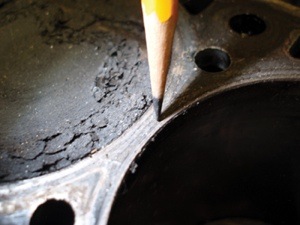
Analyzing Impairment from Overheating
Because the damage seldom stops at the cylinder head gasket, it'south important to appraise impairment to the engine and cooling system before delivering a repair approximate. In astringent cases, a "check engine light" complaint might result because oxygen sensors and catalytic converters become contaminated with coolant. In other cases, the rotating assembly in the engine block tin can be severely damaged by coolant in the oil. This condition ordinarily requires a complete engine repair or replacement.
While exceedingly rare on mod engines, combustion detonation will also beal head gasket clothing bug and will cause a premature gasket failure. Detonation tin be caused past a faulty exhaust gas recirculation (EGR) arrangement, bad fuel or over-advanced ignition timing.
The outset pace in assessing engine condition is to cheque the engine oil level. If the oil level is overfull and has an opaque, viscous appearance, it is probable contaminated with coolant. If the oil appears darkened and has a burned smell, it'due south very likely that the metal overlays on the engine bearings have softened and peeled away.
A severely overheated engine will too normally emit a burned odor from the radiator or coolant reservoir. If the engine has been severely overheated, information technology'south also likely that sediment from the water jackets has boiled into the coolant stream and deposited in the coolant reservoir or radiator core tubes. If this appears to be the instance, the radiator must exist cleaned or replaced to ensure against a connected overheating condition.
If the engine starts, but has a clicking noise similar to a valve train problem, the pistons could be scuffed due to lubrication failure or excessive piston expansion. Excessive estrus expands conventional pistons at the corners of their skirts, causing a "four-point" scoring pattern easily recognized by experienced engine rebuilders. In contrast, a lubrication failure commonly scores a piston at the center of its skirt thrust area.
Cylinder Head Damage
In improver to the indication mentioned above, a sheared timing belt is also indicative of astringent cylinder head overheating. Every bit the engine overheats, fore-and-aft cylinder head expansion is limited by the cylinder head bolts screwed into the cast-iron cake. The cylinder head so begins to arch upward at the center, seizing the camshaft in its bores and stripping the cogs on the timing belt.
Because an overheated valve can stick in its guide, intake and exhaust valves might likewise bend in non-interference engines. See Photo 2.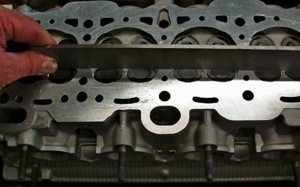
If the cylinder head is warped beyond specification, the cylinder head must be straightened or replaced. In addition, an experienced cylinder head shop volition check for cracks in the cylinder heads that are indicative of a severe overheating condition.
Cylinder Head Reconditioning
In my experience, choosing between reconditioning and replacing a cylinder head depends upon the individual application. Some cylinder head castings are so thin that they can't be reliably repaired. In other applications, a fully equipped cylinder head repair shop tin weld cracks and straighten aluminum cylinder heads to specification.
A shop should besides exist able to replace hard valve seats, restore valve guides and resurface cylinder heads to OEM specifications. Go on in listen that crude mill cuts will rapidly ruin near modern cylinder head gaskets.
In dissimilarity, belatedly-model cylinder heads crave a mirror finish to foreclose scuffing the cylinder head gasket during warm-up. See Photo 3.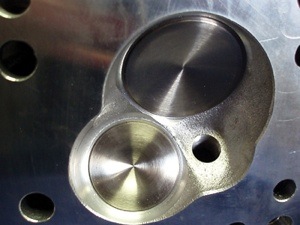
When stock is removed from the cylinder head gasket surface, camshaft timing will be retarded considering the center-to-center dimension between camshaft and crankshaft is reduced. In some cases, thicker caput gaskets or caput gasket shims are bachelor to recoup for stock removal from the cylinder caput. If no method of compensating for stock removal is available, the cylinder head should be replaced. On the other hand, many cylinder caput shops like to remove a small amount of stock to remove corrosion pitting and wear damage from the head gasket surface. In most cases, the amount of change in camshaft timing is negligible and causes no noticeable change in engine operation. Encounter Photo 4. 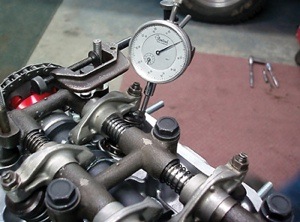
Cylinder Head Cleaning
Perfectly clean gasket surfaces on the cylinder caput and block are essential to a successful cylinder head gasket replacement. Because gaskets tend to bake onto metallic surfaces, gasket removal can be somewhat challenging.
Never use sharp metallic instruments that can scratch a gasket surface or use rotating abrasive-fiber pads that can gouge irregularities into precision-machined surfaces. Abrasive pads can as well shed annoying fibers into the engine lubrication system. During cold start-up, loftier oil pressure often pushes these fibers through the oil filter bypass valve and allows them to embed into soft engine bearings. See Photograph 5.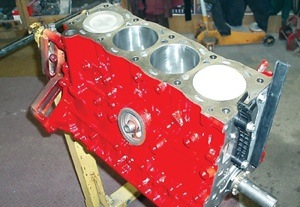
The most preferable method for cleaning aluminum surfaces is using a chemical gasket remover and a plastic scraper available from the paint section of your local hardware shop. I've as well used hardwood clothes pins besides equally brass windshield scrapers to remove hardened remainder from machined aluminum surfaces. In some cases, hardened gaskets tin can be scraped abroad with single-edge razor blades, but such a procedure requires care and patience to avoid dissentious the cylinder caput.
Cylinder Head Gaskets and Bolts
To accommodate cylinder head expansion, modern cylinder head gaskets are unremarkably either of the graphite-composite or the multi-layer steel (MLS) types, neither of which require re-torquing. Considering it's hard to make general statements about modern head gasket installations, it's extremely important to read the enclosed instructions.
Although some applications exercise require a dab of sealant on cylinder head bolt threads and at various metallic-to-metal joints, many MLS gaskets are already coated with a sealant at the factory. In well-nigh cases, applying additional sealants to a new head gasket can cause a loss of bolt torque memory as the engine warms upwardly.
In add-on, many modern cylinder heads require torque-to-yield (TTY) bolts that should be replaced with the new caput gasket. Because these bolts are stretched across their limits of elasticity to reach maximum clamping force, commodities torque is rated in degrees of rotation rather than past the conventional foot-pound or Newton-meter values. In addition, many new cylinder head bolts are pre-lubed out of the box.
If conventional bolts are being re-used, it's important to lubricate them according to manufacturer's instructions or with a light glaze of 30w not-detergent motor oil. Oils containing friction modifiers will not provide right torque values on cylinder head bolts.
Last, it's of import to forbid engine block harm past blowing any liquid balance or debris out of the bolt holes with depression-pressure compressed air. The block threads on aluminum engines must also be inspected for pulling, peculiarly if the engine was overheated. Engine block thread repair kits are generally available through OE and aftermarket sources.
Engine Warm Up
One time assembled, it's important to drain air from the cooling organization according to recommended procedures.
First, brand sure that the engine is filled to its rated capacity with the correct coolant. Adjacent, permit the engine to go through at to the lowest degree one warm-upward and cooling wheel to allow additional coolant to be fatigued into the cooling system and to check for leaks.
If coolant is circulating through the system, the upper radiator hose and radiator will feel hot to the touch. If the radiator feels cool after the engine reaches operating temperature, air might be trapped under the thermostat. If in doubt, run the engine through another heating and cooling bicycle to draw in more than coolant.
Last, if the coolant remains at the recommended level in the coolant reservoir, the vehicle is ready to release to the client.

How To Repair Scratches On Aluminum Cylinder Head,
Source: https://www.tirereview.com/cylinder-head-repair/
Posted by: fisherhents1988.blogspot.com
0 Response to "How To Repair Scratches On Aluminum Cylinder Head"
Post a Comment